
A brief history
A guidebook published by the Society for Swiss Art History traces the development of the CST from 1963 to the present day.
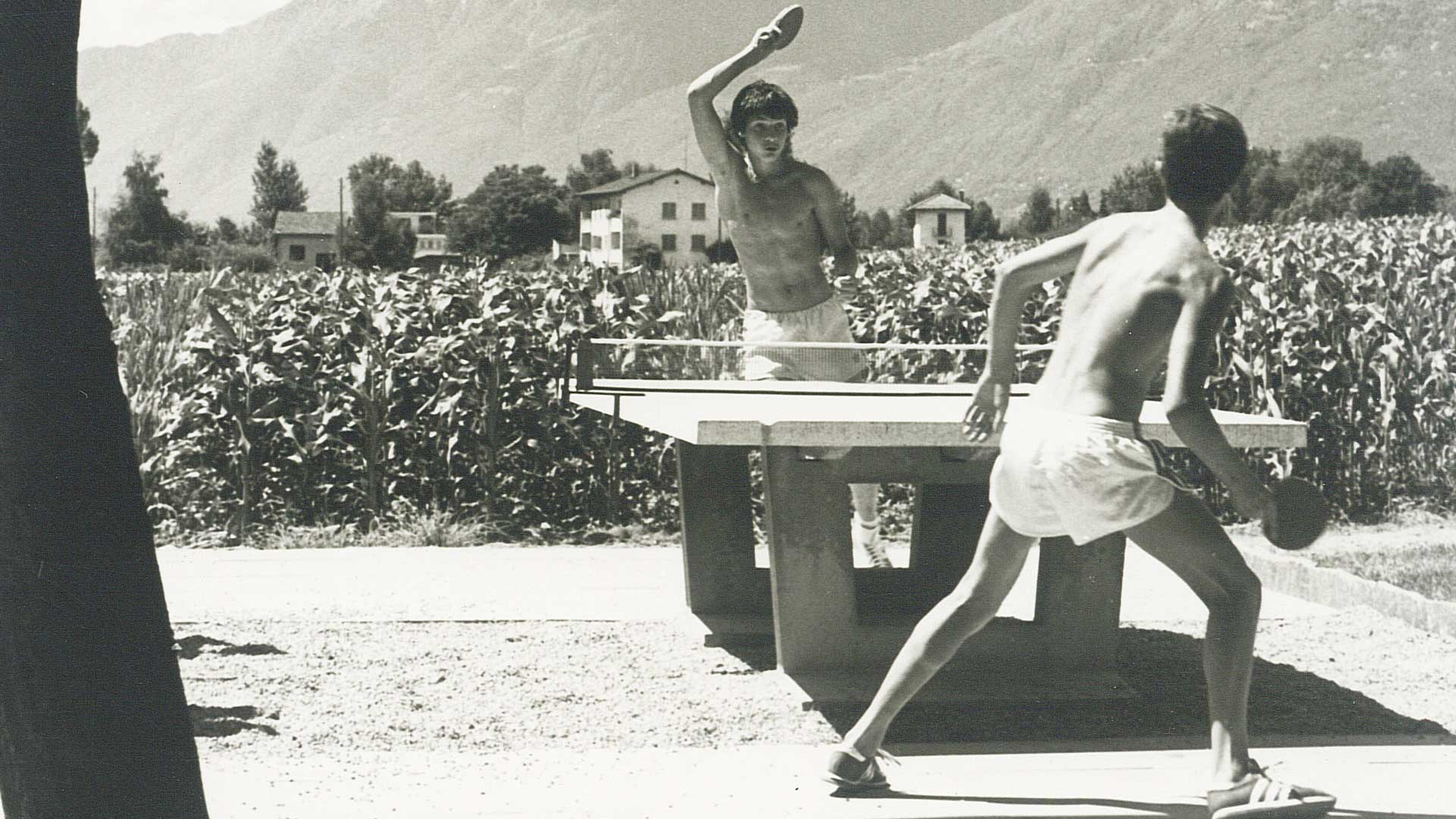
Five large buildings stand on the 350,000m2 site. Four were designed by the architect Mario Botta. Visitors to the centre appreciate the beautiful indoor and outdoor facilities. But how did they come about? With the support of the Federal Office of Sports (FOSPO), the Society for Swiss Art History has published a guide that presents the equally imposing and quiet ‹inhabitants› of Tenero: the Sasso Rosso, Gottardo, and Naviglio buildings, as well as the most recent addition, the impressive Brere building.
A sports park
Set between the lake, the mountains and the river, the CST blends harmoniously into its surroundings – an inviting oasis of greenery criss-crossed by shaded walkways lined by an avenue of trees. The area is dedicated to sports offering football pitches, tennis courts, beach volleyball courts, running tracks, long and high jump areas, parkour, BMX and half-pipe zones, pools for diving and swimming. The resulting harmony is the result of outstanding teamwork between architects and landscapers, who have succeeded in creating a welcoming natural setting in which to practise sports.
In dialogue with its surroundings
While the park offers outdoor training facilities, the buildings serve a dual purpose. They create spaces in their own right (their interiors), and at the same time mark the surroundings (through their facades and shapes). Their size, shape, the position of the windows, the colours of the materials, the position of the stairs and doors, the height of the ceilings or the intensity of the light are all elements that shape the visitor’s perception. A drawing on paper is gradually transformed into a tangible three-dimensional space. The CST was designed almost entirely by Mario Botta, right down to the very last detail. The author writes that the buildings were created to fit the ‘scale of the natural surroundings. They are in dialogue with the surroundings: with the mighty mountains, the rock, the expanse of the lake and the changing sky.
Voices and testimonies
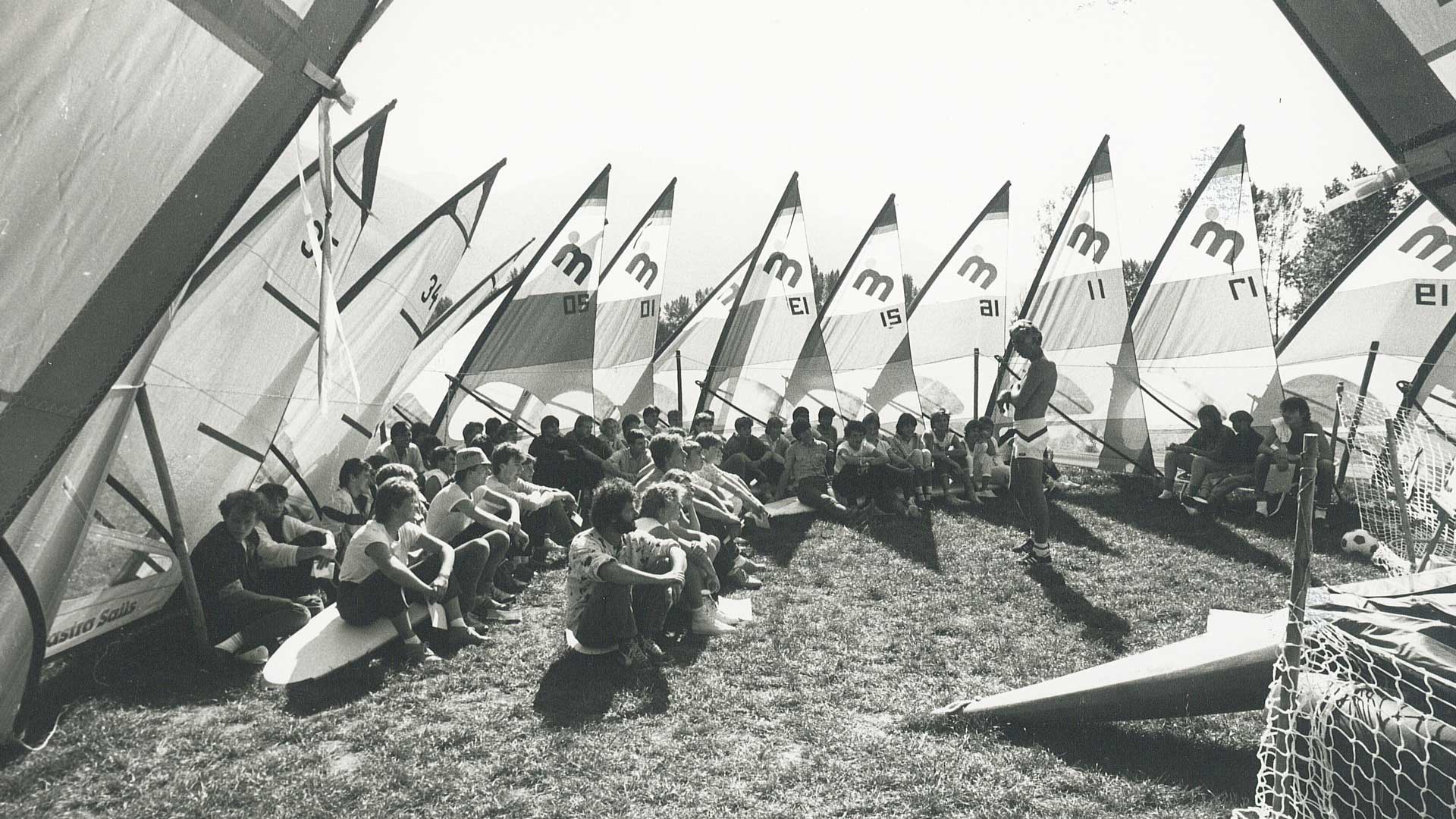
However, the guide is not only dedicated to the centre’s architecture, but also recounts the experiences and stories of those who work and train at the CST. Director Bixio Caprara talks about the creation of the centre and its development in perfect harmony with the surroundings. Swimmer Noè Ponti, who revealed his talent at Tenero, invites young readers to cultivate friendships through sport and not forget to set goals, however small. Sprinter Ajla del Ponte talks about the sense of attachment she feels when she trains at the CST; she suggests that readers take their time to progress without forgetting their enjoyment of sport. Architect Mario Botta is the narrator who accompanies us throughout the book, occasionally sharing with us the exhilarating and sometimes amusing experiences he has had over the twenty years he has worked with the CST.
View of an expert
The carefully weighed words are those of architect Silvia Berselli, professor at the University of Parma and lecturer in architectural history. Her distinctive style is perfectly suited to objective description and experiential reading. No detail escapes Silvia Berselli's expert eye, giving readers a highly accurate picture of the buildings.
Raising awareness of architectural heritage
The Society for History and Art in Switzerland was founded in 1880 with the aim of studying, documenting and publicising Switzerland's architectural heritage. Based in Bern, it works in the three national languages and has its own branch in Ticino. The publication (no. 1120) devoted to the CST is part of the series of historical and artistic guides to Switzerland, which has been in existence for 90 years.
Text: Valeria Frei
National Youth Sports Centre Tenero CST
CH-6598 Tenero
From November to February, office opening hours may be restricted at weekends.